Základní škola Olomouc, Stupkova 16
School name
Základní škola Olomouc, Stupkova 16
City
Olomouc
Country
Czechia
Challenge taken
Food waste reduction
Year
2026
Shortly describe your project
On Thursday, we held a project day at our school on the theme “Let’s Not Waste Food,” which was very well received, especially by the upper-grade students.
Throughout the morning, students actively engaged with the issue of proper food handling. They discussed why it’s important not to waste food, how to plan shopping trips, and how to make effective use of the ingredients we have at home.
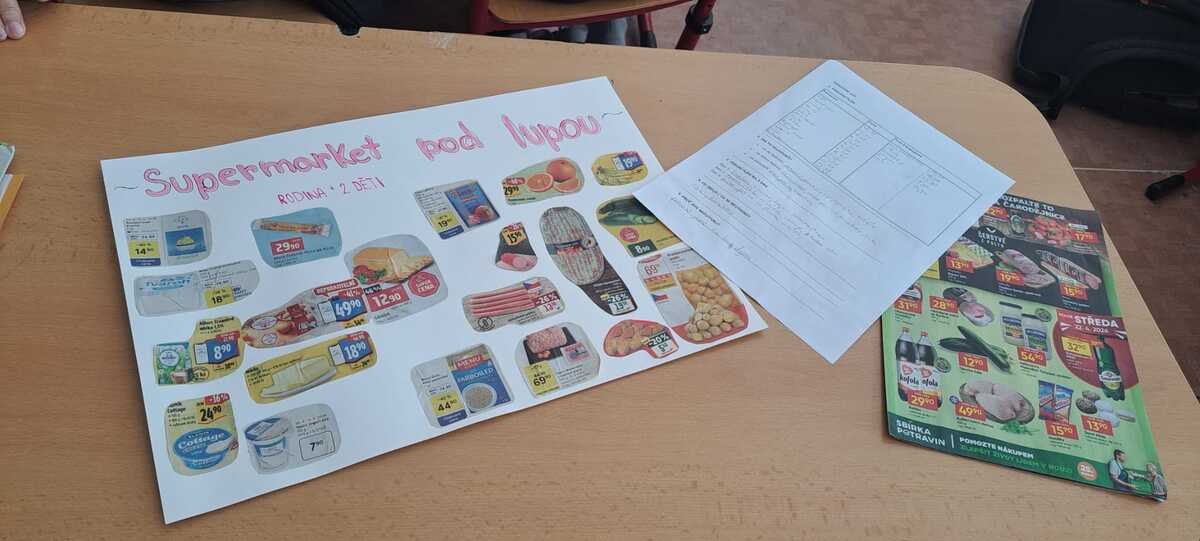
The program also included a hands-on component. Students worked with advertising flyers to create their own shopping lists and thought about how to shop smartly and economically. They demonstrated great creativity in coming up with recipes in which they tried to make the most of available ingredients without creating unnecessary waste.
The program was complemented by stations with various tasks that the students completed one by one. At each station, they learned new information—for example, how to properly store food, how to tell if food is still safe to eat, or how to make good use of kitchen scraps. There were also playful activities that entertained the students while encouraging them to reflect.
As part of the project day, second-grade students went shopping at a nearby store and learned about the journey of food from seed to plate.
The entire day was dedicated to discovery and experimentation. The children had the opportunity to view food from a different perspective—not just as a routine part of their diet, but also as a source of knowledge. They learned the difference between non-perishable and perishable foods and why it is important to follow proper storage conditions.
Great attention was also paid to distinguishing between healthy and less suitable foods. The children actively discussed, shared their experiences, and learned to think about what is good for their bodies. The experiments that generated the most enthusiasm were those in which they could see for themselves how food changes under different conditions.
The project day was not only fun but, above all, beneficial. The students took away new knowledge and practical experience that they can use in their daily lives.
How to Organize the “Let’s Not Waste Food” Project Day
Goal and Focus
- Explain to students the importance of not wasting food.
- Develop practical skills: meal planning, proper storage, and using leftovers.
- Encourage responsible behavior in daily life.
Structure of the Day
A combination of three types of activities is recommended:
- Discussion sessions (for sharing experiences and gaining a basic understanding of the topic)
- Stations / workshops (interactive learning in small groups)
- Practical and creative tasks (applying knowledge)
Recommended activities
a) Introductory discussion
- Why food is wasted and what the impacts are
- Sharing students’ experiences from home
- Basics of a responsible approach to food
b) Stations with tasks
Each station focuses on a specific topic:
- proper food storage
- the difference between non-perishable and perishable foods
- how to tell if food is still safe to eat
- ways to use leftovers
c) Practical tasks
- Shopping planning (working with flyers, creating a budget-friendly shopping list)
- Creating recipes from leftovers or available ingredients
- Shopping simulation (e.g., a store visit for younger students)
d) Experiments and observations
- Observing changes in food under different conditions
- Simple storage experiments
- Comparing shelf life
e) Thematic extensions
- The journey of food “from seed to plate”
- Basic principles of healthy eating
Adaptation by age
- Elementary school: more games, visual aids, simple tasks, and field trips
- 2nd stage: discussions, planning, working with information, more complex tasks
Organizational recommendations
- Divide students into smaller groups and rotate them among the stations
- Involve more teachers (each supervising one station)
- Create a pleasant and informal atmosphere
- Encourage active participation and students’ own ideas
Outcomes and Benefits
- Students will gain practical skills they can use at home
- Their awareness of the value of food will increase
- Responsible behavior and critical thinking will be strengthened
Final Tip
Include a brief summary or reflection (e.g., what students are taking away, what they will change in their behavior). This significantly increases the impact of the entire day.